
AIS Prevention:
Help Stop the Silent Invaders
Prevention is the First Line of Defense!
Everyone can help prevent the spread of AIS!
Whether you are a boater, angler, paddler, seaplane pilot, water gardener/pond owner, nursery owner, aquarium enthusiast, or even a teacher, you have a very important role to play in keeping Wisconsin’s waterbodies free of AIS.
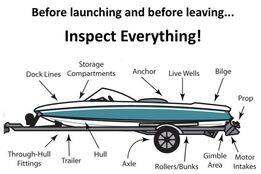
Boaters, paddlers, and anglers, before launching, after loading, and before transporting on a public highway, you must:
INSPECT, REMOVE, DRAIN, AND NEVER MOVE!
These quick and simple steps can empower you to prevent the spread of AIS by enabling you to inspect every part of your equipment that has been in contact with the water. They allow you to discover and remove all potential invasive species including spiny water fleas trapped in water left in livewells, zebra mussels attached to your boat hull or trailer bunkers, and microscopic larvae found anywhere there is dirt, sand, mud, plants and standing water remaining on your watercraft, trailer, and equipment.
Prevention steps will also:
Help Stop the Silent Invaders
Prevention is the First Line of Defense!
Everyone can help prevent the spread of AIS!
Whether you are a boater, angler, paddler, seaplane pilot, water gardener/pond owner, nursery owner, aquarium enthusiast, or even a teacher, you have a very important role to play in keeping Wisconsin’s waterbodies free of AIS.
Boaters, paddlers, and anglers, before launching, after loading, and before transporting on a public highway, you must:
INSPECT, REMOVE, DRAIN, AND NEVER MOVE!
These quick and simple steps can empower you to prevent the spread of AIS by enabling you to inspect every part of your equipment that has been in contact with the water. They allow you to discover and remove all potential invasive species including spiny water fleas trapped in water left in livewells, zebra mussels attached to your boat hull or trailer bunkers, and microscopic larvae found anywhere there is dirt, sand, mud, plants and standing water remaining on your watercraft, trailer, and equipment.
Prevention steps will also:
- Protect your engine from overheating and propeller from fouling,
- Protect your boat performance, gasoline consumption, and overall watercraft and equipment investment.
- Protect your waterfront property value, swimming area, and your health.
- Protect fisheries, native species, and aquatic ecosystems.
- Saves millions of dollars in water supply and electric-power generating equipment maintenance.
- Finally, it enables you to comply with Wisconsin law. The few minutes required to INSPECT, REMOVE, DRAIN, AND NEVER MOVE contributes to the overall long-term health of our natural and human environments.
|

|
TIPS & TRICKS TO HELP YOU PREVENT THE INTRODUCTION AND SPREAD OF AIS.
- Learn to identify invasive species in your area. Report any sightings to your County Land and Water Conservation Department or the Department of Natural Resources.
- Identify pathways that lead to the introduction of multiple species, sharing these findings with family, friends, lake group, and partners and work to close these pathways.
- Remove invasive plants and exotic ornamental plants on your property and plant native plants in their place.
- Clean hiking boots, off-road vehicles, tires, and other outdoor gear before you go to a new area.
- Never release aquarium fish, snails, and plants, live bait, or other exotic animals into lakes and streams.
- Clean construction machines before moving to a new job site. The mud and soil stuck to the machines can harbor seeds from invasive plants.
- Do not move firewood! Buy it where you will burn it or gather it on-site where permitted.
- Inspect your boat, trailer, and equipment and remove any attached plants, animal, mud, and sand. Drain all water from boats, motors and all equipment. Never move live fish away from a waterbody and dispose of unwanted bait in the trash.
SWIMMERS
- CLEAN off visible plants, animals and mud from swimsuits, masks, goggles, floats, and beach toys.
- DRAIN water from toys or other water-containing devices before leaving water access.
- DRY everything five days or more, OR wipe with a towel before reuse.

NON-MOTORIZED WATERCRAFTS & INFLATABLES
- CLEAN off visible aquatic plants, animals, and mud from watercraft, gear, paddles, floats, ropes, anchors, dip nets, and trailer before leaving water access.
- SCRUB hull using a stiff brush.
- Rinse watercraft, trailer and equipment with high pressure hot water, when possible.
- DRAIN water from watercraft, sponges, bailers, and water containing devices before leaving water access.
- DRY everything five days or more, unless otherwise required by local or state laws, when moving between waters to kill small species not easily seen OR wipe with a towel before reuse.
SCUBA DIVERS /SNORKELERS
- CLEAN off visible plants, animals and mud from wetsuit, dry suit, mask, snorkel, fins, buoyancy compensator (BC), regulator, cylinder, weight belt, watercraft, motor, and trailer before leaving water access.
- Soak gear used in saltwater dives in 5% dishwashing liquid solution(1 cup/gallon), or gear used in freshwater dives in 3.5% salt solution, (½ cup/gallon) for 30minutes.
- Rinse
- inside and outside of gear with hot water, when possible.
- DRAIN water from BC, regulator, cylinder boot, watercraft, motor, and any water containing devices before leaving water access.
- DRY everything five days or more, unless otherwise required by local or state laws, when moving between waters to kill small species not easily seen OR wipe with a towel before reuse.
WATERFOWL HUNTERS
- CLEAN off visible plants, animals and mud from waders, hip boots, watercraft, motor, trailer, ATV’s, push poles, decoys, decoy lines and anchors before leaving area
- BRUSH hunting dogs and rinse kennels with tap water.
- DRAIN water from watercraft, motor, bilge and other water containing devices before leaving water access.
- DRY everything five days or more, unless otherwise required by local or state laws, OR wipe with a towel before reuse.
- CUT emergent vegetation above waterline for blinds or camouflage in accordance with regulations.
- USE elliptical and bulb-shaped anchors to help avoid snagging aquatic plants
WISCONSINS INVASIVE SPECIES RULE NR-40
Invasive species rule – NR 40 | | Wisconsin DNR
Additional Prevention Information
AIS LOCATIONS IN WISCONSIN
Invasive species rule – NR 40 | | Wisconsin DNR
Additional Prevention Information
- AIS Identification Guides
- AIS Pathways
- AIS What Everyone Needs to Know
- Facts about Oneida County's Lakes, Rivers, Streams & Wetlands
- Understanding the Connection Between Ballast Water and Aquatic Invasive Species in the Great Lakes
- 2023 Oneida County Stewardship Awards Banquet
AIS LOCATIONS IN WISCONSIN